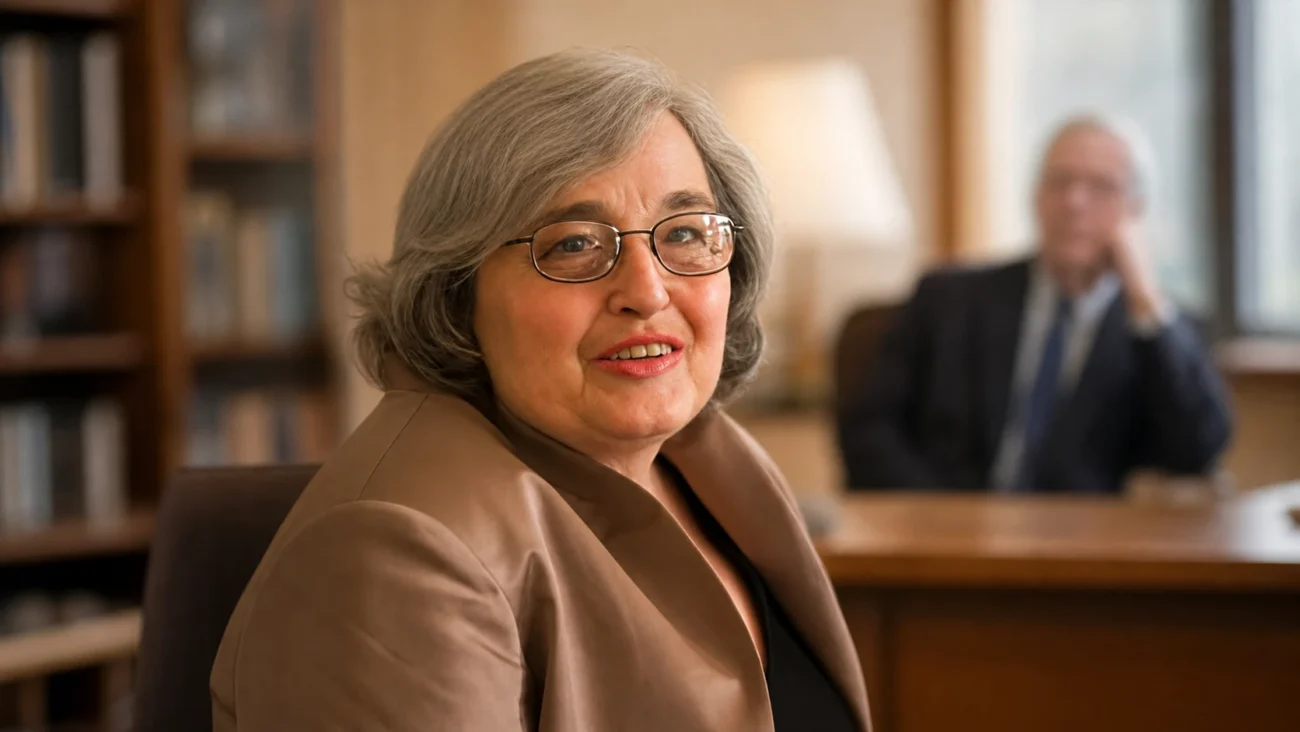
Sherrill Redmon is a historian and retired archivist best known professionally for leading Smith College’s Sophia Smith Collection of Women’s History from 1993 to 2012. She is also known as the first wife of longtime U.S. senator Mitch McConnell. Their marriage lasted from 1968 until their divorce in 1980, and they had three daughters: Porter, Claire, and Eleanor.
Redmon’s documented career extends well beyond that political-family connection. She earned a Ph.D. in American history, worked in archives at the University of Louisville, and later spent nearly two decades directing one of the major archival collections devoted to women’s history. Her work included developing manuscript collections, supporting oral-history projects, assisting historical scholarship, and directing a federally funded effort to make records of women’s activism more accessible.
Reliable information about Redmon becomes much thinner after her retirement in August 2012. Her exact birth date, current residence, net worth, and present private circumstances have not been established by the strongest public records documenting her career.
Key takeaways
- Sherrill Redmon is a historian and archivist who directed Smith College’s Sophia Smith Collection from 1993 to 2012.
- She earned a Ph.D. in American history from the University of Kentucky in 1974 and worked in archives at the University of Louisville before joining Smith.
- Her archival work included women’s manuscript collections, oral-history initiatives, and a $265,000 National Endowment for the Humanities project covering nine collections and 670 linear feet of records.
- Redmon was Mitch McConnell’s first wife from 1968 to 1980, and they have three daughters: Porter, Claire, and Eleanor.
- She retired from Smith College in August 2012. Authoritative information about her life after retirement is limited.
Sherrill Redmon profile summary
| Detail | Verified information |
|---|---|
| Name | Sherrill Redmon |
| Profession | Historian and retired archivist |
| Education | Ph.D. in American history, University of Kentucky, 1974 |
| Earlier workplace | University of Louisville Archives |
| Major role | Director, Sophia Smith Collection |
| Smith College tenure | 1993–2012 |
| Retirement | August 2012 |
| Former spouse | Mitch McConnell |
| Marriage | 1968–1980 |
| Children | Porter, Claire, and Eleanor |
| Notable project | Uncovering Women’s Work for Equality Across the 20th Century |
Education and early archival work
Redmon’s strongest documented educational credential is her doctorate. The University of Kentucky History Department identifies her as a 1974 Ph.D. graduate, while independent reporting in The New Yorker describes the degree specifically as a doctorate in American history.
Claims frequently repeated online about her high school, undergraduate education, exact birth date, and birthplace are less secure. Those details do not appear with comparable support in the institutional records documenting her academic and professional career.
Before moving to Smith College, Redmon worked as an archivist at the University of Louisville. University archival material places her among University Archives staff by 1986, establishing that her archival career was already underway years before she joined Smith.
Her Louisville work also shows an early focus on preserving women’s historical records. A University of Louisville Libraries retrospective says that Redmon and archivist Tom Owen spearheaded the Women’s Manuscript Collection Project in 1988. Supported by a Kentucky Foundation for Women grant, the project focused on processing papers belonging to Louisville women and women’s organizations.
A separate historical account from 1992 identifies Redmon explicitly as an archivist at the university who advised a local historic-photograph project.
The surviving evidence does not establish her precise University of Louisville hiring date or every title she held there, so a detailed year-by-year employment history would go beyond what the public record supports.
Leading the Sophia Smith Collection
Redmon’s best-documented professional period began in 1993, when she became director of the Sophia Smith Collection at Smith College.
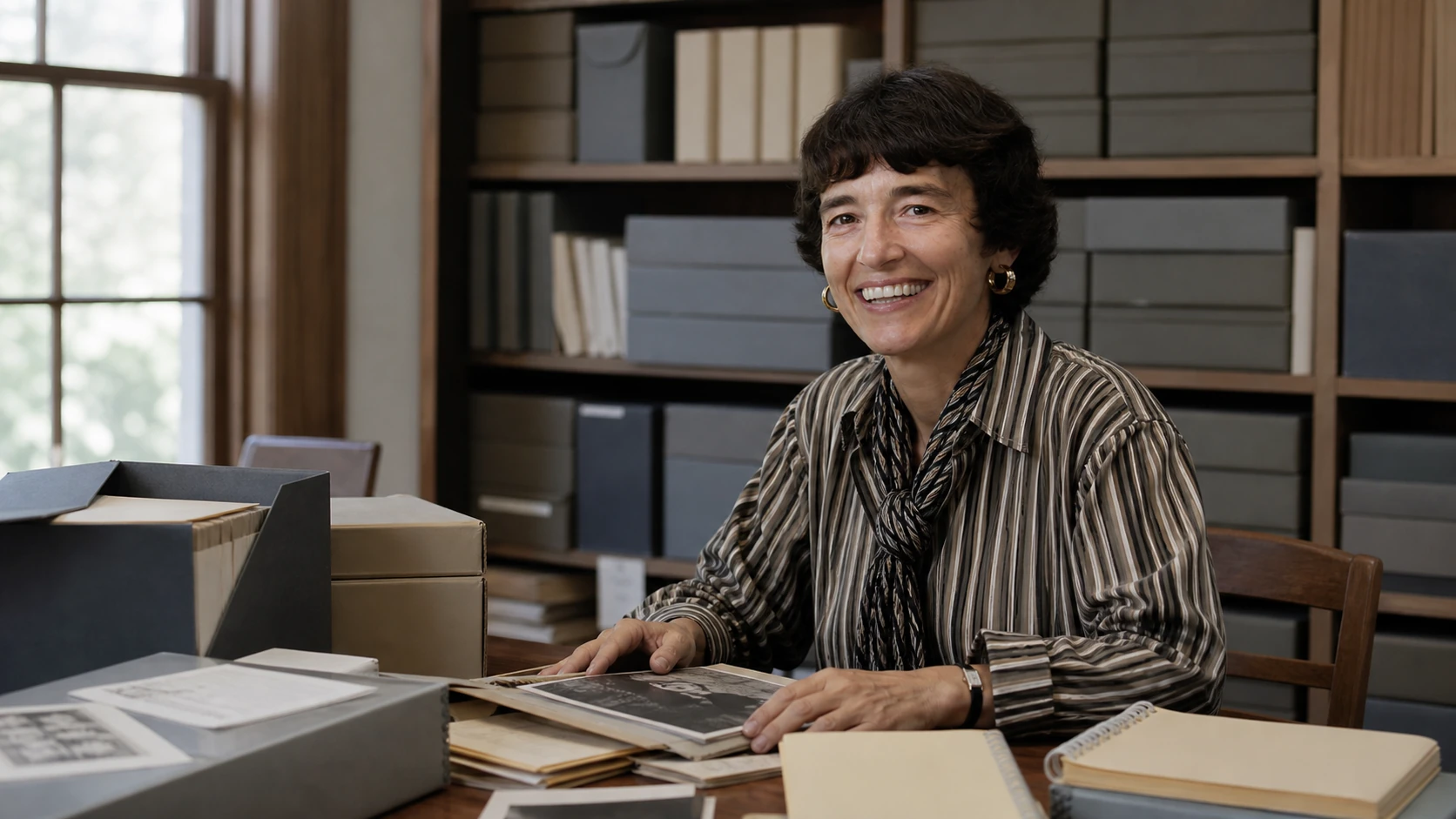
Smith’s own archival record identifies her tenure as 1993–2012. The collection preserves material relating to women’s lives, organizations, political activity, professions, social reform, and cultural history, making Redmon’s job substantially more than custodial storage. Collection development, description, access, and scholarly use were central parts of the work.
A 2000 Smith College article identified Redmon as the collection’s director and discussed the wide range of researchers using its holdings. Under her leadership, the archive served scholarship covering political activism, labor, professional life, reform movements, and other dimensions of women’s history.
Redmon also contributed directly to historical scholarship. In 1999, Smith reported that she had written the American National Biography entry on Eleanor Coit, a labor educator associated with the YWCA.
Another example came through Barbara J. Love’s reference work Feminists Who Changed America, 1963–75. A 2006 Smith College account said Love worked closely with Redmon and the Sophia Smith Collection during development of the book. The archive helped with research databases, questionnaires, source material, and other aspects of the project.
These projects illustrate Redmon’s professional contribution more clearly than broad labels such as “women’s-rights activist.” Her public record is strongest when describing what she actually did as an archivist and historian.
Expanding the historical record
One recurring theme of Redmon’s tenure was an effort to preserve a broader range of women’s experiences.
That work intersected with the Voices of Feminism Oral History Project, which Smith College Libraries now describes as a collection of more than 50 in-depth video interviews addressing labor activism, anti-racism, reproductive justice, lesbian rights, anti-poverty organizing, anti-violence work, and other movements.
The New Yorker reported that Redmon collaborated with Gloria Steinem in connection with the project. The evidence supports describing Redmon as a collaborator while she headed the Sophia Smith Collection; it does not support claims that she personally founded or directed Voices of Feminism.
A later Smith College account provides a concrete example of how this collection-building worked. In its 2023 profile of activist Loretta Ross, Smith reported that Redmon and oral historian Joyce Follet interviewed Black women’s health activist Byllye Avery. Avery encouraged them to contact Ross.
Ross was initially concerned that donating her materials might mean losing access to them. According to Smith’s account, Redmon and Follet explained that the papers could be digitized so Ross could continue to use them. Ross ultimately donated much of her material and participated in an extensive oral history.
The episode shows how archival work can affect whose experiences remain available to later historians. It required identifying collections, building relationships with donors, preserving material, and creating practical access for both researchers and the people whose histories were being documented.
A major NEH-funded archival project
One of the clearest measures of Redmon’s professional responsibilities appears in federal grant records.
The National Endowment for the Humanities lists Redmon as project director from July 2009 through October 2012 for “Uncovering Women’s Work for Equality Across the 20th Century.”
The project received $265,000 and was designed to arrange and describe nine manuscript collections totaling 670 linear feet. The records documented women’s social and political activism across the 20th century.
Those figures matter because they show the physical and organizational scale of the archival work. Hundreds of linear feet of records can encompass correspondence, organizational files, photographs, reports, personal papers, and other materials that require systematic processing before researchers can use them effectively.
The grant amount was institutional project funding, not Redmon’s personal compensation or income.
Marriage to Mitch McConnell
Redmon’s name often appears in searches because of her former marriage to Mitch McConnell, but that relationship represents only one part of her public biography.
CNN Editorial Research lists McConnell and Redmon’s marriage as lasting from 1968 to 1980. They had three daughters together: Porter, Claire, and Eleanor.
Jane Mayer’s 2020 profile of McConnell in The New Yorker independently confirms that Redmon was the mother of his three daughters and that the couple divorced in 1980. It also discusses Redmon’s later archival career and her work connected with Gloria Steinem.
There is no need to assign a definitive cause to the divorce. Although later reporting has discussed allegations surrounding McConnell during that period, the reliable record does not establish a single documented reason for the marriage ending.
Redmon’s daughters likewise should not be confused with their mother professionally. One recurring online error assigns Redmon a role with the political campaign organization Take On Wall Street. That position belonged to her daughter Porter McConnell, not Sherrill Redmon.
Retirement and recognition
Redmon retired from Smith College in August 2012.
That timing comes from Redmon herself. In a University of Kentucky History Department alumni publication, she described retiring as director of the Sophia Smith Collection of Women’s Archives and as Coordinator of Special Collections.
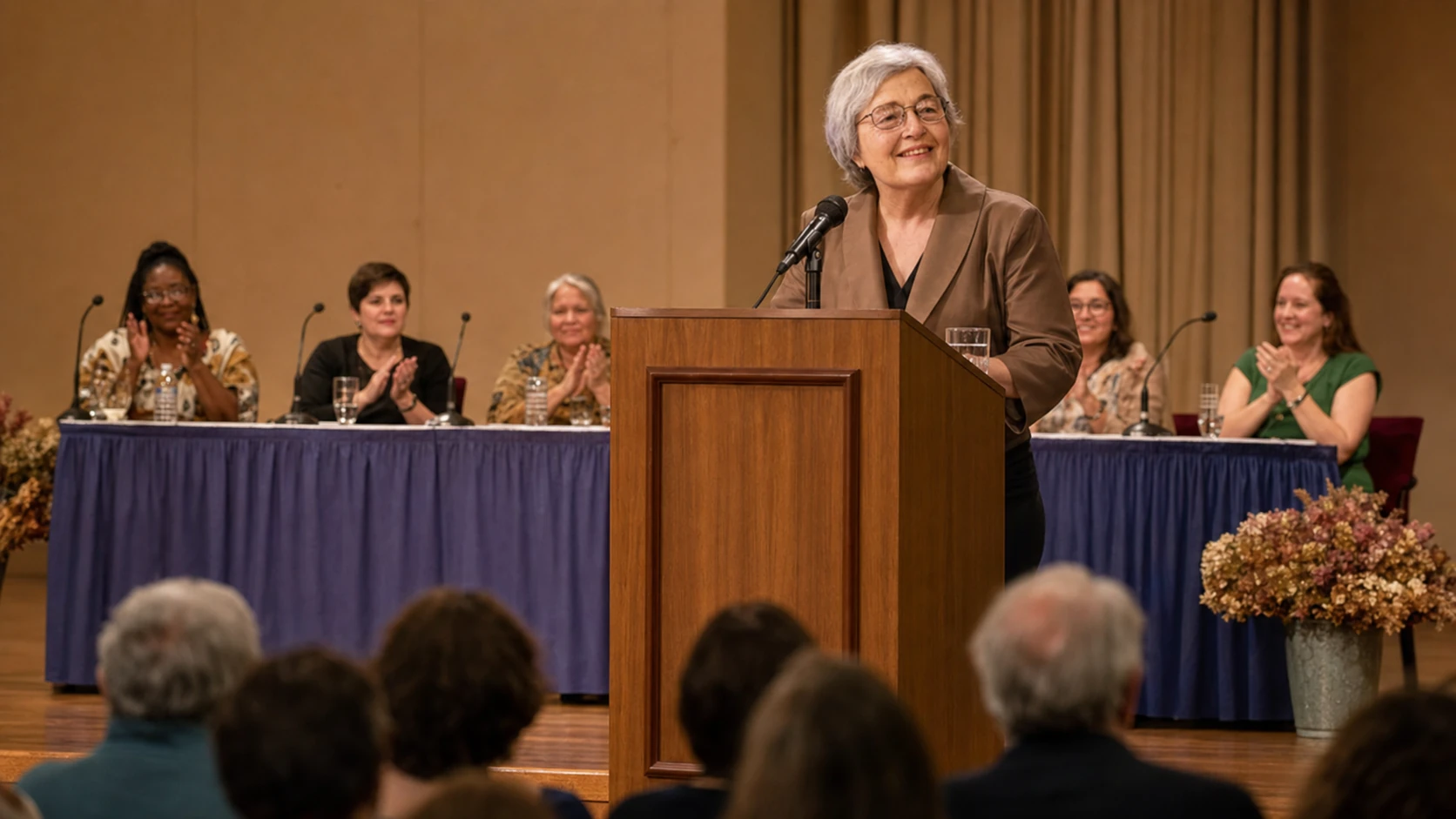
Smith College subsequently marked her tenure with “An Activist Archives: The Sophia Smith Collection at 70” on February 3, 2013. The Smith College event archive describes the program as a celebration honoring Redmon and lists participants including Gloria Steinem, Alison Bechdel, Loretta Ross, Katsi Cook, Anna Holley, and Marianne Bullock.
The event provides a useful institutional endpoint to her formal career at Smith: rather than simply disappearing from an employment directory, Redmon concluded a 19-year directorship with a program focused on the archive and the histories it had preserved.
Her influence remains visible in the collections themselves. Smith continues to make oral-history material available through its digital oral-history collections, while later institutional writing has revisited collection-building work carried out during her tenure.
What is known about Sherrill Redmon now?
The strongest public information about Redmon’s present circumstances remains limited.
Her last firmly documented professional status is her August 2012 retirement from Smith College. Later institutional material discusses the historical impact of work carried out during her directorship but does not establish a subsequent professional position.
Some commercial and biography websites still describe her as the current director of the Sophia Smith Collection. That information is outdated: Smith identifies her directorship as ending in 2012, and Redmon herself said she had retired.
Other frequently repeated claims deserve similar caution. A February 6, 1943 birth date appears on numerous biography sites, but the authoritative institutional and journalistic sources documenting her career do not firmly establish it. For that reason, a precise current age cannot responsibly be given from the available evidence.
Likewise, published figures purporting to show Redmon’s personal net worth are not supported by documented assets, compensation, financial filings, or other evidence sufficient to calculate her wealth.
Her current residence and private relationship status are also not necessary to understand her public career and are not strongly established by the sources documenting her work.
A 2020 New Yorker report said Redmon was apparently working on a memoir at that time, but no reliably documented publication of such a memoir was established in the later record considered for this profile.
Why her archival work matters
Redmon’s career is useful to understand because archivists influence the historical record in ways that are often less visible than the work of authors or public officials.
Historical research depends on material first being preserved, organized, described, and made available. Decisions about which papers to pursue and how collections are processed can determine whether later scholars have enough evidence to reconstruct the activities of organizations, activists, workers, and communities.
Redmon’s documented work repeatedly involved that process. At Louisville, she helped develop collections centered on women and women’s organizations. At Smith, she oversaw an established women’s-history archive while participating in projects that broadened its holdings and encouraged scholarly use. The NEH project near the end of her tenure demonstrates the scale of that responsibility in concrete terms.
That professional record gives Redmon an identity distinct from the political figure to whom she was once married. Her strongest public legacy lies in the records she helped preserve and make usable.
Conclusion
Sherrill Redmon is best understood not simply as Mitch McConnell’s first wife, but as a historian and archivist whose documented career stretched from the University of Louisville to nearly two decades leading Smith College’s Sophia Smith Collection.
Her work helped preserve and organize records of women’s lives, political organizing, social reform, and activism, including projects involving Gloria Steinem, Loretta Ross, and major manuscript collections. Since retiring in August 2012, Redmon has maintained a much lower public profile, leaving her archival career—not unsupported details about her age, wealth, or private life—as the clearest basis for assessing her public place in history.
